How to Use Fabric Grocery Bags as Planters (Step-by-Step)
Reusable shopping bags can work as low-cost container planters for herbs, greens, and compact vegetables — with a few setup steps that make the difference between plants that thrive and soil that stays waterlogged.
Why Fabric Bags Can Work as Planters
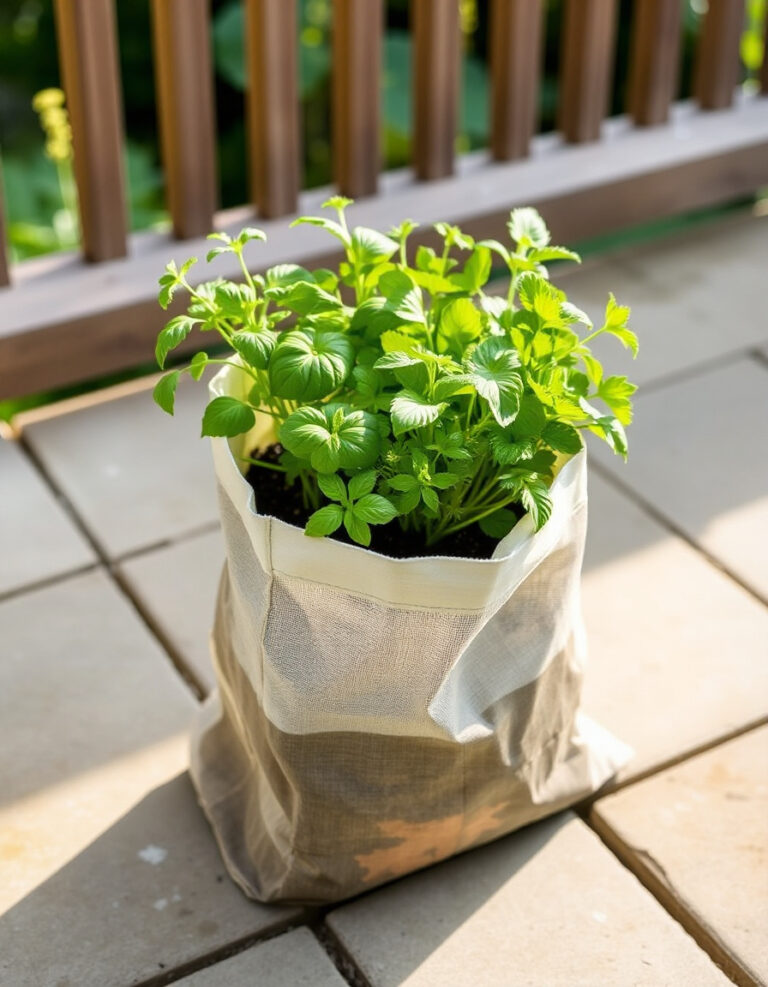
Plastic containers trap moisture and heat roots in summer. Fabric grocery bags — particularly canvas or thick woven polypropylene — let air move through the sides, which tends to keep soil temperatures more stable and may reduce the risk of root rot in wet conditions.
The main trade-off is that fabric dries out faster than plastic, so these planters typically need more frequent watering. For most herbs and leafy greens, that’s a manageable routine.
Key Takeaway
Fabric bags work well for plants with shallow root systems. They’re less suited to deep-rooted crops like carrots or full-size tomatoes, which tend to do better in larger, rigid containers.
What You’ll Need
- Sturdy canvas or woven fabric grocery bags (handles optional)
- Quality potting mix — not garden soil
- Perlite (optional, helps drainage)
- Seeds or transplants
- A waterproof saucer or tray
- Liquid fertilizer for container plants
Caution
Avoid thin, laminated, or plastic-coated bags. They restrict drainage and may leach plasticizers into soil over time. Look for bags where water can visibly pass through the fabric.
How to Set Up a Fabric Grocery Bag Planter
- Inspect the bag before filling Check seams for loose stitching and reinforce with a needle and thread if needed. Small holes are fine — they help with drainage. Large tears will split under the weight of damp soil.
- Place the bag before adding soil A filled bag can weigh 8–15 lbs and becomes harder to reposition. Set it in its final spot first. Put a waterproof saucer underneath to protect decks, patios, or indoor floors.
- Mix your growing medium A general-purpose potting mix works well on its own. Mixing in about 20% perlite by volume tends to improve drainage and reduces compaction over time, which can be useful in smaller bags.
- Fill to within 2 inches of the top Leave headspace for watering. Soil packed to the brim tends to wash over the sides and can make it harder to water evenly.
- Plant seeds or transplants Follow spacing guidelines for your crop. For transplants, plant at the same depth they were growing in their original container. Water gently after planting to settle the soil.

Which Plants Do Well in Fabric Bag Planters
Plants with compact root systems tend to perform best. Here’s a practical breakdown:
| Plant Type | Good Candidates | Notes |
|---|---|---|
| Culinary herbs | Basil, parsley, thyme, oregano | Thrive in smaller bags (12–14 in.) |
| Leafy greens | Lettuce, spinach, arugula, kale | Fast-growing; good for successive planting |
| Compact vegetables | Cherry tomatoes, peppers, dwarf beans | Use larger bags (16+ in.); stake as needed |
| Flowers | Marigolds, petunias, impatiens | Useful for pest deterrence near edibles |
| Avoid | Carrots, parsnips, large tomato varieties | Need deeper root space than most bags offer |
Watering and Feeding
Check soil moisture daily during warm weather by pressing a finger about an inch into the surface. If it feels dry at that depth, water thoroughly until it drains from the bottom. In hot or windy conditions, twice-daily watering may be necessary.
Frequent watering tends to flush nutrients from the soil faster than in-ground beds. A balanced liquid fertilizer applied every two to three weeks during the growing season can help maintain healthy growth.
Pro Tip
In midsummer heat, positioning bags where they get morning sun and afternoon shade can reduce water stress — especially for leafy greens, which tend to bolt quickly in sustained heat.
How Long Do Fabric Bag Planters Last?
Canvas bags typically hold up for two to three growing seasons with reasonable care. Woven polypropylene bags may last longer but are harder to compost at the end of their useful life. UV exposure and the freeze-thaw cycle are the main factors that degrade the material.
At the end of the season, empty the soil into a compost bin or garden bed, clean the bags, and store them dry. Soil can be reused with added compost, though it’s worth replacing it entirely every two to three years to avoid nutrient depletion and disease buildup.
Before You Plant: Quick Answers
Do fabric grocery bags need drainage holes?
Most woven or canvas bags naturally allow water to pass through the material. If you water thoroughly and the soil stays soggy for more than a day, adding a few small holes in the bottom can help. Test by observing how quickly excess water drains after watering.
What size bag do I need for tomatoes?
Cherry tomato varieties can work in larger bags — roughly 16 to 18 inches wide and at least 12 inches deep. Full-size indeterminate tomato varieties generally do better in purpose-built fabric pots or large rigid containers where root volume isn’t constrained.
Can I reuse the soil from fabric bag planters?
Yes, with some preparation. Remove old plant material, mix in fresh compost, and inspect for signs of pests or disease before replanting. Replace the soil completely if it has become very compacted or if you have had disease issues in the bag.
Are fabric grocery bags safe for growing vegetables?
Natural fiber bags — cotton, jute, canvas — are generally considered safe for edible crops. For synthetic woven bags, look for food-safe or BPA-free labeling. Avoid bags with plastic laminate coatings or unknown chemical treatments.