14 Minimalist Garden Ideas to Simplify Your Outdoor Space
A minimalist garden isn’t about stripping your yard down to concrete and gravel. It’s about making deliberate choices — fewer plants, cleaner lines, and materials that hold up without constant attention — so the space works with your schedule instead of against it.
These ideas draw on core minimalist design principles: a limited plant palette, quality hardscaping, and purposeful negative space. Whether you’re redesigning a full backyard or looking to cut down on weekend maintenance, there’s a practical starting point here.
What Is a Minimalist Garden?
Minimalist garden design borrows from the same principles as minimalist interiors: simplicity, intentional placement, and restraint. In practice, that means limiting the number of plant species, favoring geometric or architectural forms over busy mixed borders, and letting hardscape materials do much of the visual work.
The style tends to require less ongoing maintenance than traditional cottage or mixed-border gardens, though “low maintenance” doesn’t mean no maintenance. Mulch needs refreshing, hedges need trimming, and hardscape surfaces need occasional cleaning. The difference is that those tasks tend to happen seasonally rather than weekly.
14 Minimalist Garden Ideas
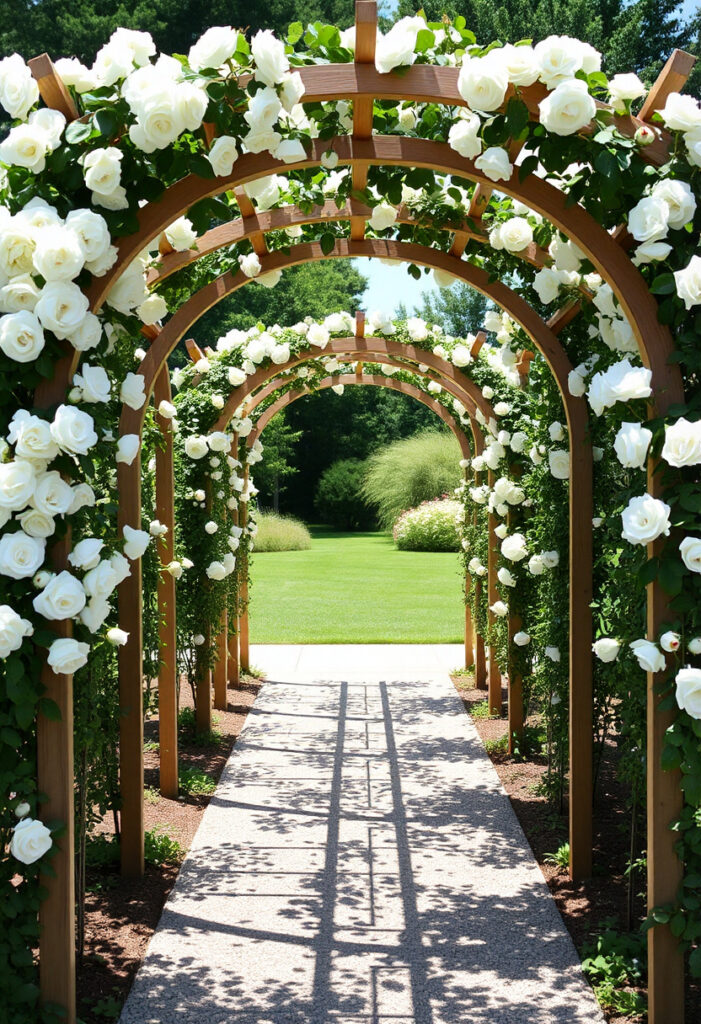
01. Try a Monochrome Planting Scheme

Limiting your planting to a single color family — all whites, all greens, or silver-and-gray tones — creates visual cohesion without requiring a complicated plant plan. White gardens work well with hostas, Hydrangea arborescens, and silver-leafed artemisia. An all-green palette using varied foliage textures, from fine fescue to bold bergenia, adds depth while keeping the palette controlled.
Monochrome schemes tend to look intentional rather than sparse, which is harder to pull off with a mixed-color planting in a simplified garden.
Plants to Consider
- White: Hydrangea arborescens ‘Annabelle’, white agapanthus, Astrantia major ‘White Giant’
- Green: variegated hostas, lady fern, Irish moss
- Silver: artemisia, lamb’s ear, Stachys byzantina
02. Use Gravel or Stone Pathways

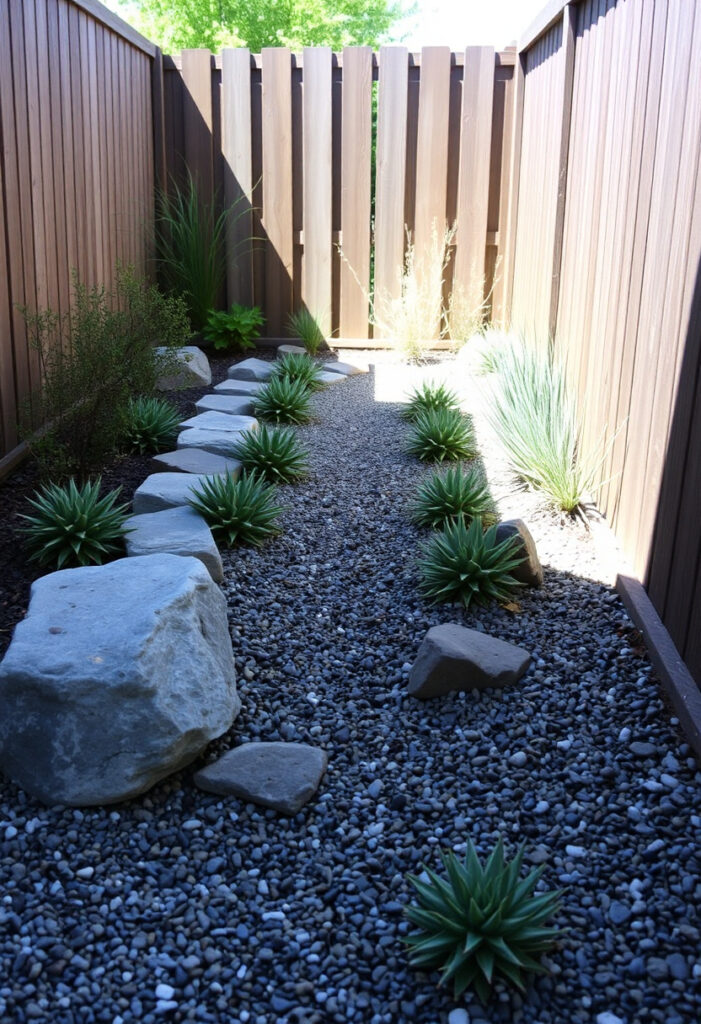
Gravel pathways are one of the more practical changes you can make to a minimalist garden. They define movement through the space, drain well, and require little upkeep once installed. Stick to a uniform stone size and a neutral color — gray, buff, or cream — to avoid competing with surrounding plantings.
Large-format pavers or natural stone slabs work well for high-traffic paths and hold up better in wet conditions than loose gravel. Either way, install a weed barrier fabric underneath to reduce long-term maintenance.
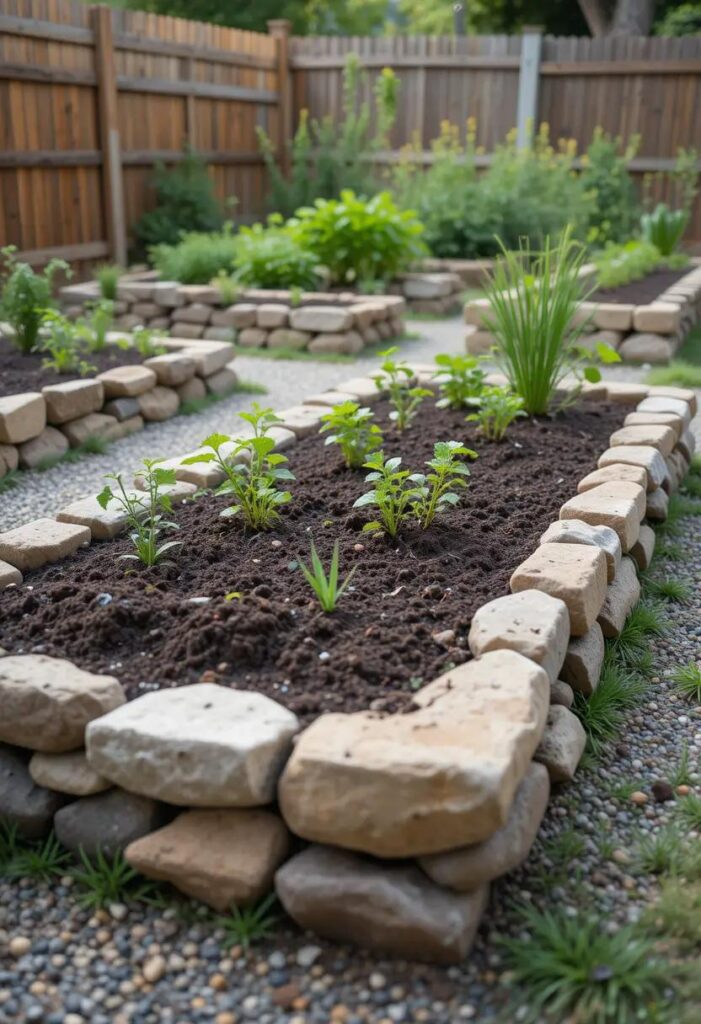
03. Add Raised Planter Boxes

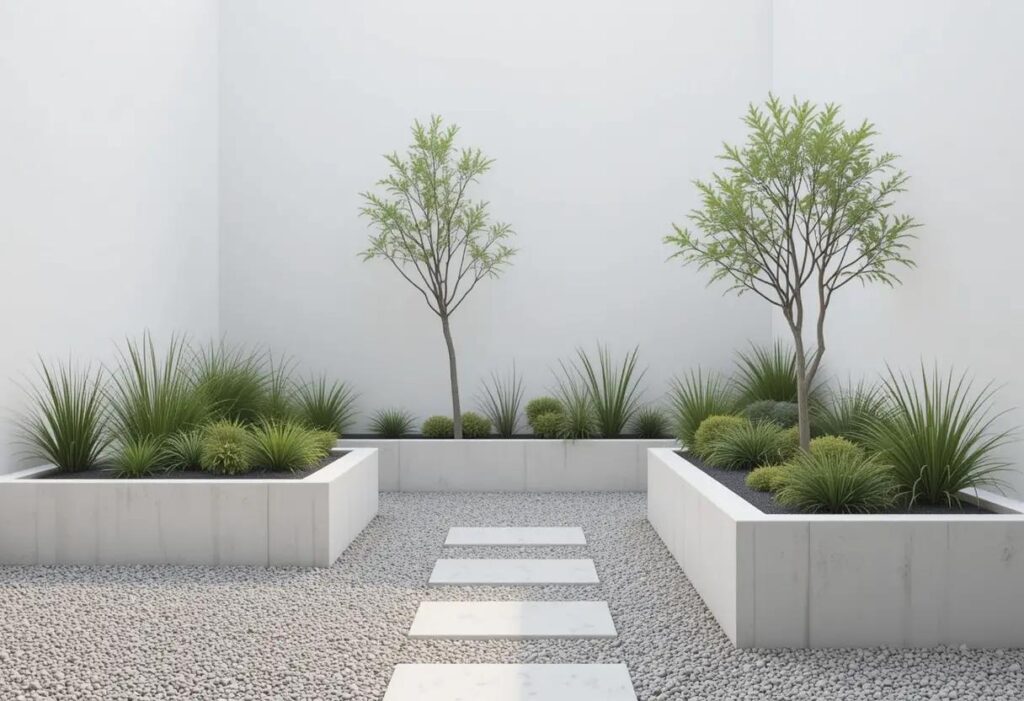
Raised planters introduce architectural structure and help organize a space that might otherwise feel flat or formless. Treated lumber, corten steel, and poured concrete all read as intentional in a minimalist setting — the material choice tends to matter more here than in a cottage-style garden.
Standardized dimensions and consistent placement create visual rhythm. Grouping two or three matching planters along a fence or patio edge tends to feel more resolved than scattering them throughout the yard.
A Note on Sizing
Boxes at least 12 inches deep allow a wider range of plants. For ornamental grasses or shrubs, 18 inches or more tends to produce healthier root development.
04. Plant a Succulent Garden
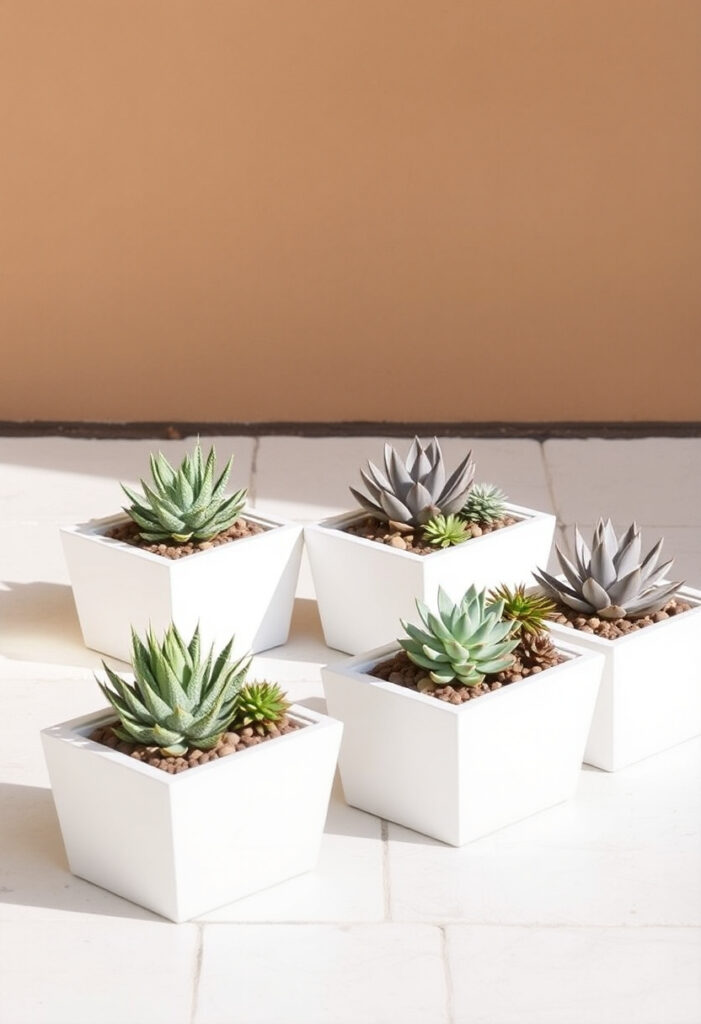
Succulents — Echeveria, sedum, agave, and their relatives — work well in minimalist designs because their sculptural forms do the visual work that other gardens rely on color and variety to achieve. They thrive in well-draining, low-nutrient soil and require infrequent watering once established, making them a practical choice for busy homeowners or drought-prone climates.
Group succulents in odd numbers and vary the height and form within a planting for a more naturalistic arrangement.
05. Use Ornamental Grass as a Border Plant

Ornamental grasses add movement and seasonal texture without requiring much intervention. Fountain grass (Pennisetum), feather reed grass (Calamagrostis x acutiflora ‘Karl Foerster’), and miscanthus varieties all maintain a clean, upright habit through much of the growing season and hold their structure into fall.
Mass plantings along a border or fence tend to look more intentional than individual specimens scattered throughout a bed. Most grasses benefit from being cut back to the ground once annually in late winter or early spring.
06. Choose Simple Outdoor Seating

Furniture with straight lines and neutral finishes — teak, powder-coated aluminum, or weathered steel — integrates into a minimalist garden without drawing attention away from the plantings. Avoid ornate detailing or bright colors, which can read as visual noise in a restrained outdoor space.
Built-in seating using concrete or composite materials is worth considering for permanent installations, since it removes the clutter of moveable furniture while keeping sightlines clear.
07. Anchor the Space with a Single Statement Tree

One well-placed specimen tree tends to do more for a minimalist garden than a collection of smaller ornamental plants. Japanese maples (Acer palmatum), ornamental pears, and columnar forms like Carpinus betulus ‘Fastigiata’ offer structure, seasonal interest, and a clear focal point without overwhelming a smaller yard.
Leave the ground plane around the base simple — a ring of fine gravel, a groundcover like Vinca minor, or bare mulch — to let the tree’s form read clearly.
08. Add a Defined Wildflower Patch

A controlled wildflower area can introduce movement and seasonal color while still fitting within a minimalist framework — the key word being “controlled.” Establish clear edges using metal edging, a mown grass border, or stone trim to prevent the planting from blurring into adjacent areas.
Native wildflower mixes suited to your climate tend to establish with minimal intervention and support beneficial insects through the growing season. Plan for annual seeding and occasional spot-weeding to keep aggressive species from taking over.
09. Plan a Structured Lighting Scheme

Outdoor lighting extends the usable hours of a garden while highlighting key design elements — the branching structure of a specimen tree, the texture of a gravel pathway, the clean edge of a planter wall. Linear LED strips along pathways, low-voltage uplights for trees, and simple post fixtures all read well in a minimalist setting when the fixture forms are kept geometric and understated.
Focus on functional placement rather than decorative layering. Two or three well-positioned fixtures tend to read better than a large number of competing light sources.
10. Replace Lawn with Natural Mulch

Trading turf grass for wood chip, bark, or decomposed granite mulch is one of the more impactful changes you can make to a minimalist garden. It reduces mowing, fertilizing, and irrigation while unifying planting beds into a more cohesive visual plane.
Mulched areas benefit from refreshing every one to two years as the material breaks down. Choose a color that complements your existing hardscape — dark bark against light concrete reads clearly; a midtone brown tends to read as neutral against most materials.
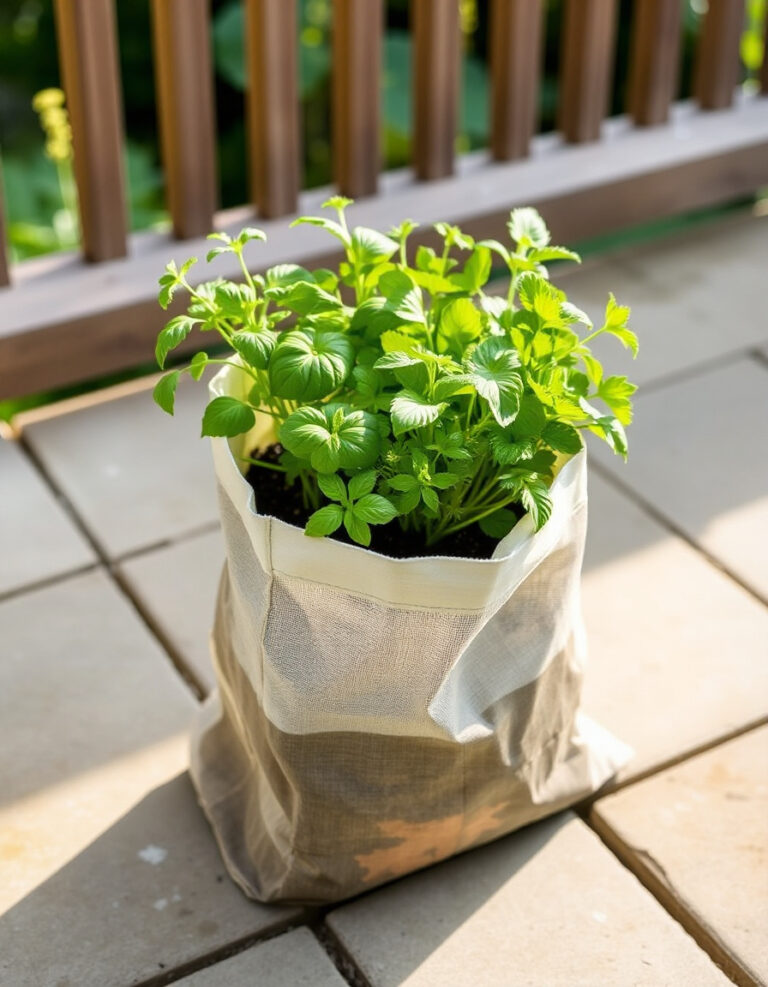
11. Plant a Geometric Herb Garden

A culinary herb garden can fit neatly within a minimalist framework when it’s organized rather than freeform. Raised beds or container groupings arranged in a grid or linear pattern — basil, rosemary, thyme, and sage each in their own clearly defined area — maintain visual order while providing practical use.
Many herbs also offer attractive foliage and low water needs once established, making them a reasonable choice for minimalist planting schemes that prioritize low maintenance alongside aesthetics.
12. Use Large-Leaf Plants as Focal Points

Bold foliage — hostas, ferns, or structural tropicals like cannas or elephant ears — anchors shaded corners and low-light areas where flowering plants tend to struggle. A grouping of three to five large-leafed specimens tends to register more clearly as a design decision than a single plant.
These plantings provide season-long interest through foliage alone and reduce the pressure to incorporate color through flowers, which can complicate a restrained plant palette.
13. Choose Geometric Concrete Planters

Square, rectangular, and cylindrical concrete planters reinforce clean geometry and hold up well to outdoor conditions with minimal maintenance. Grouping planters in a repeated arrangement — three identical square containers planted with the same species, for example — creates a cohesive statement without visual complexity.
Concrete planters tend to retain moisture longer than terracotta, which can be useful in drier climates. In wet climates, make sure drainage holes are adequate to prevent waterlogging.
14. Consider a Modular Planter System

Modular planting systems use standardized components that can be rearranged as plants grow, seasons change, or design priorities shift. They’re a practical option for renters, homeowners who prefer flexibility over permanence, or anyone working through a garden design before committing to fixed hardscape.
The trade-off is that modular systems can read as less resolved than built-in planters if the arrangement isn’t intentional. Keeping components in a consistent material, color, and size tends to maintain the clean look that makes minimalist design work.
Tips for Planning a Minimalist Garden
Start with a simple site sketch before purchasing materials or plants. Identify where seating, pathways, and primary plantings will go, and note which areas receive sun versus shade throughout the day. Working from a plan tends to reduce costly mistakes and helps ensure the finished space reads as intentional rather than assembled.
Invest in quality hardscape materials where the budget allows. Durable stone, steel, and concrete require less replacement over time than lower-cost alternatives, and the long-term maintenance reduction typically offsets the higher upfront cost.
Soil preparation before planting matters more in a minimalist garden than in a busy mixed border, where problem plants can go unnoticed. Healthy, well-amended soil supports stronger plants that need less intervention.