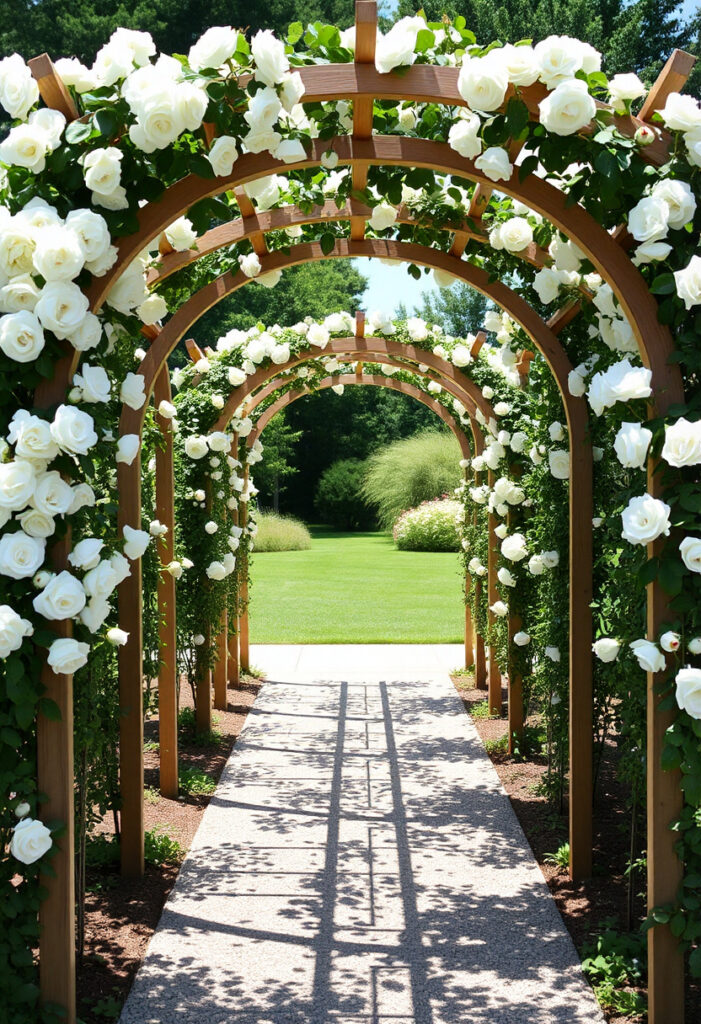
14 Garden Walkway Ideas to Transform Your Outdoor Space
A garden path is, at its core, a practical thing. It keeps feet off the grass, protects plant roots from compaction, and gives the yard a bit of structure without a lot of fuss.
The material, the width, and whether it curves or runs straight all quietly shape how the space reads. The 14 ideas below cover a range of materials — from gravel and brick to flagstone and reclaimed stone — with practical notes.
Things to Consider Before You Start
Walk the intended route before committing to anything. Look for drainage patterns, tree roots that could lift paving over time, and whether two people need to pass comfortably. A 36-inch width works for solo traffic; 48 inches is more comfortable for social use. Some materials look sharp on day one but need steady upkeep. Others take a season to settle in but largely look after themselves.
01. Natural Stone Stepping Stones

Stepping stones suit informal gardens well. Fieldstone, slate, and sandstone each read differently — slate cooler and more graphic, sandstone warmer and organic. Look for stones at least 2 inches thick and 18 inches across, spaced 18 to 24 inches apart. Set them on a thin sand base; they will shift in soft ground without one.
02. Brick Pathway Patterns

Brick is forgiving for a DIY project — it cuts with a rented masonry saw and lays without mortar in most residential settings. Herringbone holds up well under traffic; running bond is easier to cut. Base preparation matters more than pattern. Skip the compacted gravel and sand layer and the path will settle unevenly within a couple of seasons.
03. Gravel Garden Paths

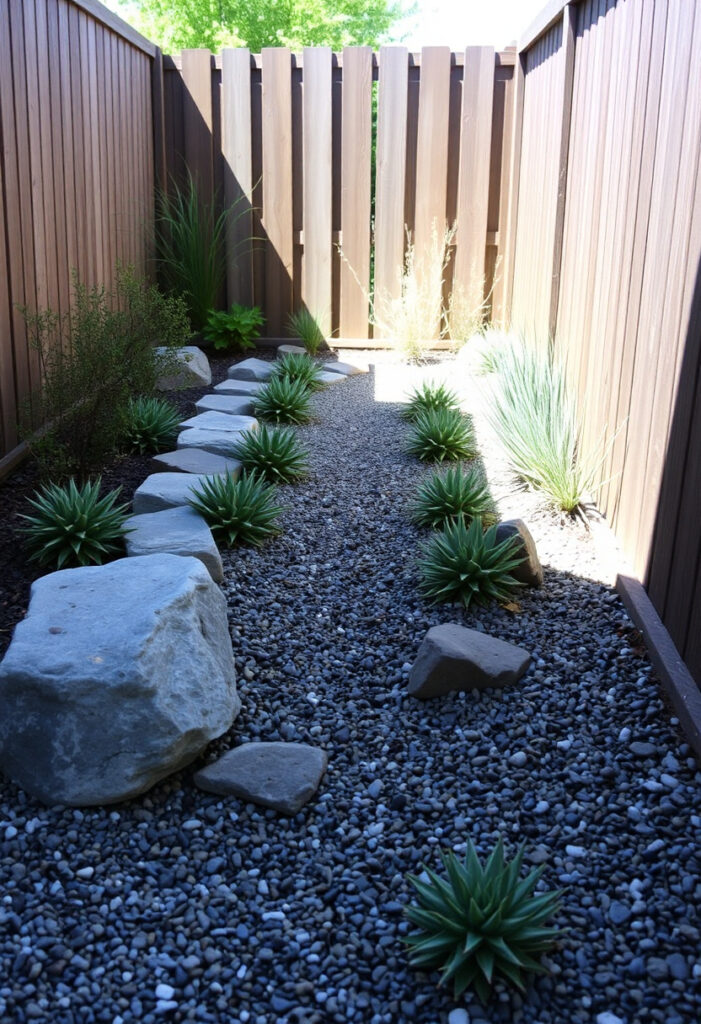
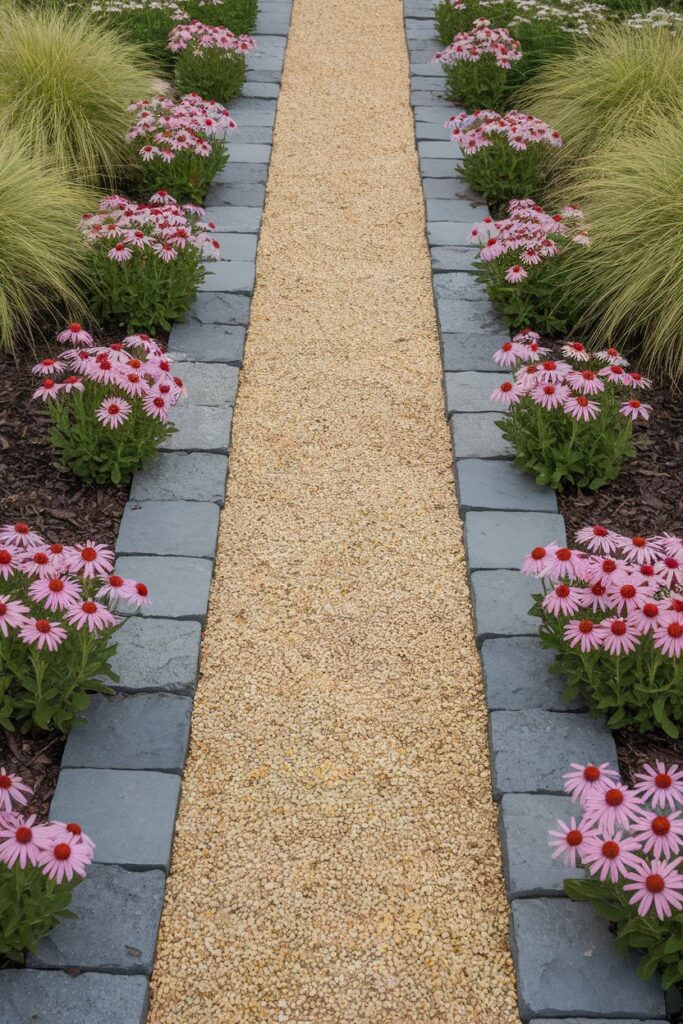
Pea gravel, crushed granite, and decomposed granite each behave differently underfoot. Decomposed granite packs firm; pea gravel stays loose. Either way, edging is essential — without it, gravel migrates into adjacent beds within a season. Steel edging holds a clean line better than plastic, especially on curves.
04. Flagstone Walkway Design

Flagstone works in formal and informal settings alike. Its textured surface is reasonably slip-resistant when wet. Bluestone suits cooler climates; limestone reads warmer; sandstone is softer but wears faster in high-traffic areas. Dry-set with moss or creeping thyme in the joints is more forgiving for first-time installers than mortared joints.
05. Concrete Pavers and Slabs

Concrete pavers handle freeze-thaw cycles well and come in a wide range of finishes, including options that read like natural stone. Large-format slabs with ground cover between them suit contemporary designs. Sealing periodically helps prevent the chalky, worn appearance that can develop in wet or high-UV climates.
06. Mulch and Wood Chip Paths

Shredded bark and wood chips are affordable, weed-suppressing, and comfortable underfoot — a natural fit for woodland or kitchen gardens. The trade-off is longevity; organic mulch needs refreshing every one to two years. Hardwood mulch holds up and holds its color better than softwood.
07. Mixed Material Combinations
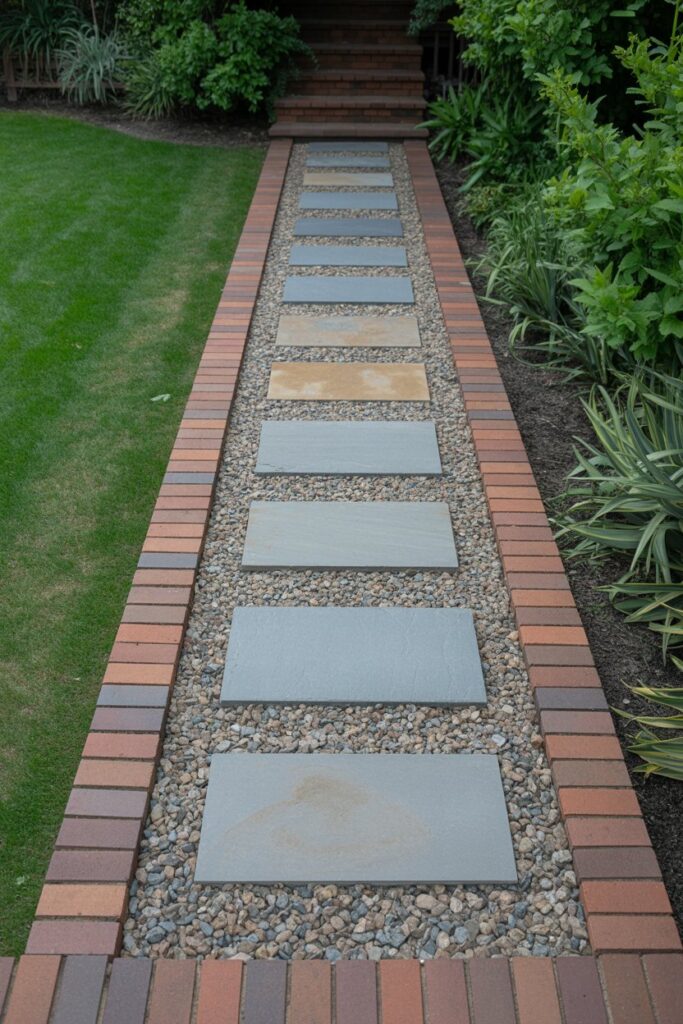
Combining materials can reduce cost and add texture, but limit the palette to two per path. More than that tends to look unfocused. Choose materials that share at least one quality — color, tone, or scale — and research their installation requirements separately, since base preparation varies.
08. Curved Pathway Layouts

Curves slow foot traffic slightly, draw the eye, and can make a small garden feel larger. Lay out the route with a garden hose and walk it a few times before breaking ground. Keep curves gradual — a tight bend looks forced and makes moving a cart or wheelbarrow awkward.
09. Raised Walkway Construction

Raised paths work well in poorly drained areas or where you want visual separation from surrounding planting. Landscape timbers, cut stone, and concrete block are all common choices. Pay attention to transition points at each end — an abrupt step-up without a clear approach becomes a trip hazard over time.
10. Permeable Paving Solutions

Permeable pavers and gravel-filled grid systems allow rainwater to pass through rather than run off, which helps in areas prone to pooling. Visual results vary widely by product quality. These materials tend to cost more upfront but can offset drainage costs in the right setting.
11. Geometric Pattern Designs

Geometric layouts require consistency, so they work best with manufactured pavers or cut stone rather than irregular natural material. Use string lines and a level throughout — one off-square run compounds quickly as the pattern extends. These paths suit formal and contemporary gardens more naturally than loose cottage plantings.
12. Grass and Living Ground Cover Paths

A mown grass path or a planting of creeping thyme integrates more quietly into a garden than any built material. The trade-off is maintenance — grass needs mowing, edging, and reseeding in worn areas. Ground covers like thyme are tougher underfoot but may have bare patches during establishment.
13. Reclaimed Material Walkways

Old brick, broken concrete, and salvaged stone have character that new materials take years to develop, and they often cost less if sourced locally. Inspect each piece before laying — spalling brick and uneven surfaces can become trip hazards. Avoid older pressure-treated wood near edible gardens.
14. Low-Maintenance Path Options

Natural stone, quality concrete pavers, and manufactured products need little beyond occasional cleaning. Organic materials will always need replenishment. Even so, “low maintenance” is relative — flagstone may need re-leveling after hard frost cycles, and mortared joints can deteriorate over a decade. The better question is how much maintenance, and how often.
How to Plan Your Garden Walkway Project
Measure the route, note grade changes, and check for underground utilities before digging. Most municipalities offer a free locate service. Allow 10 to 15 percent overage in your material estimate for cut stone and pavers. Research base preparation requirements for your chosen material before purchasing — getting the foundation right is where most successful paths are made or lost.