17 Front Flower Bed Ideas with Rocks and Stones
Rock and stone bring something to a front flower bed that many other materials can’t match: year-round structure. Whether you’re working with a gentle slope, a flat foundation strip, or an open front yard, stone adds permanence and texture that ages well. These 17 front flower bed ideas use rocks and stone in different ways — so you can find an approach that fits your yard, your home’s style, and your comfort level with installation.

Planning Your Front Flower Bed Design
Before you start shopping for stone, spend some time reading your yard. Walk the space at different points in the day and note how much direct sun each area gets — that determines which plants will actually thrive once the bed is in place. Also pay attention to where water pools after a heavy rain. Those low spots may need amended drainage before any planting goes in.
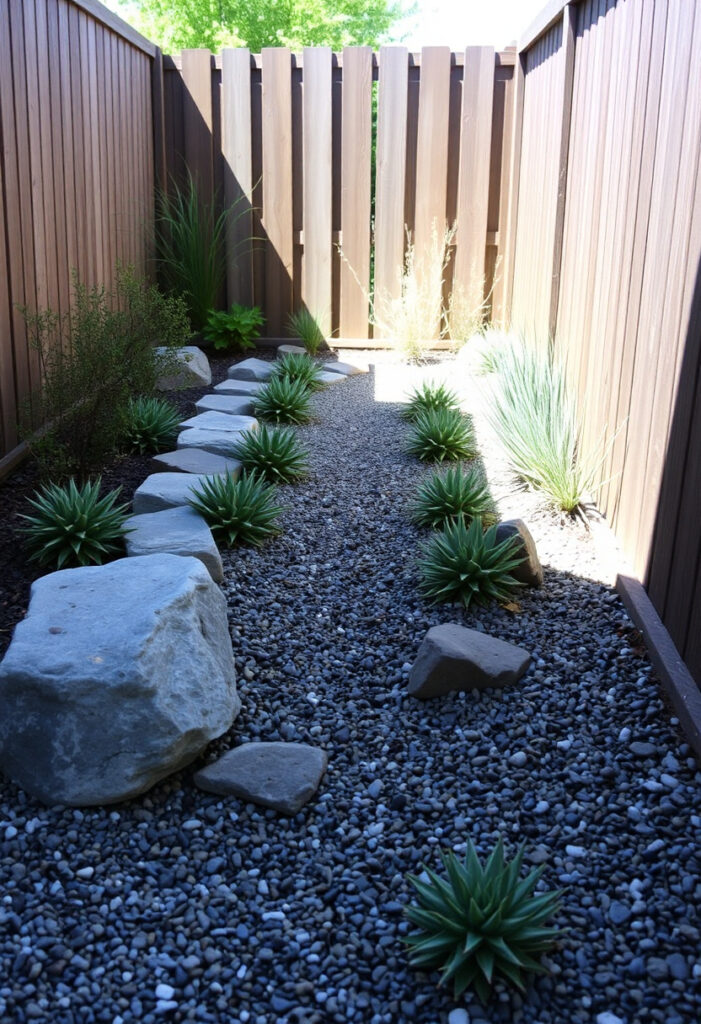
Once you have a feel for the conditions, measure your intended bed area and sketch a rough layout. It doesn’t need to be precise — just proportional enough to estimate how much stone and soil amendment you’ll need, and to make sure the scale feels right against your home’s facade.
17 Creative Rock and Stone Flower Bed Ideas
1. River Rock Perimeter Garden

Smooth river rocks in the 2–4 inch range make relaxed, curved borders that suit cottage-style plantings. Lavender, ornamental grasses, and low-growing roses tend to look at home next to the neutral gray and tan tones of river rock. Because the stones are rounded, they’re forgiving to arrange — you can shift them as your bed shape evolves.
2. Fieldstone Terraced Beds

On a sloped front yard, terraced planting beds separated by low fieldstone retaining walls let you garden on ground that would otherwise shed soil and water too quickly. Stack flat stones in offset courses — each layer set slightly back from the one below — for stable walls without mortar. The pockets between walls tend to hold moisture better than open slopes.
3. Limestone Block Borders
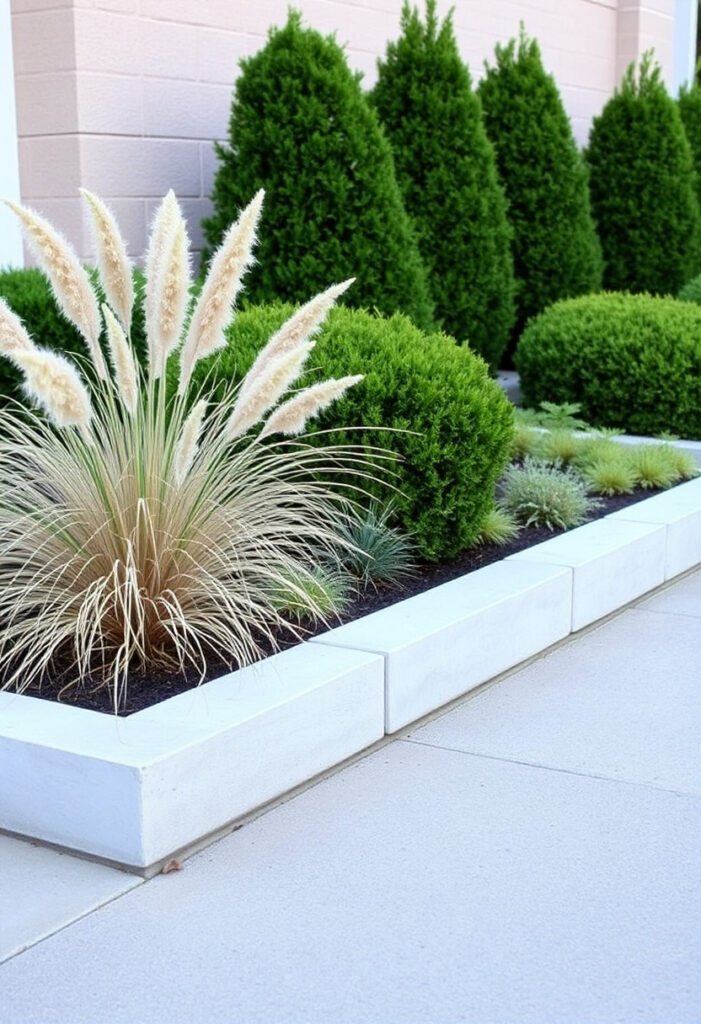
If your home has a clean-lined or contemporary exterior, limestone blocks cut to uniform sizes create geometric edges that hold their shape precisely. They pair well with structured ornamental grasses and low perennials that won’t obscure the stonework. The uniform rectangular form reads as intentional rather than casual, which suits more formal front yard designs.
4. Flagstone Pathway Integration
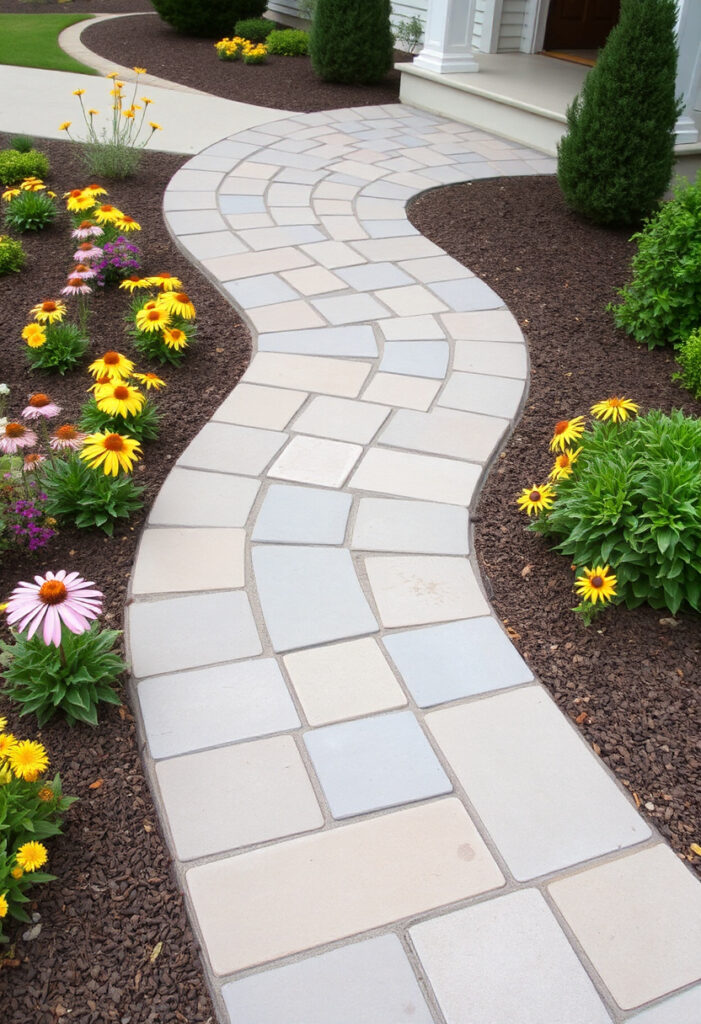
Combining a flower bed with an adjacent flagstone walkway — by extending a few stones into the planting area — creates a sense of cohesion between hardscape and landscape. It also gives you natural stepping points for maintenance access without compacting planted soil. Keep the flagstone placement irregular enough to look organic rather than grid-like.
5. Cobblestone Curved Borders
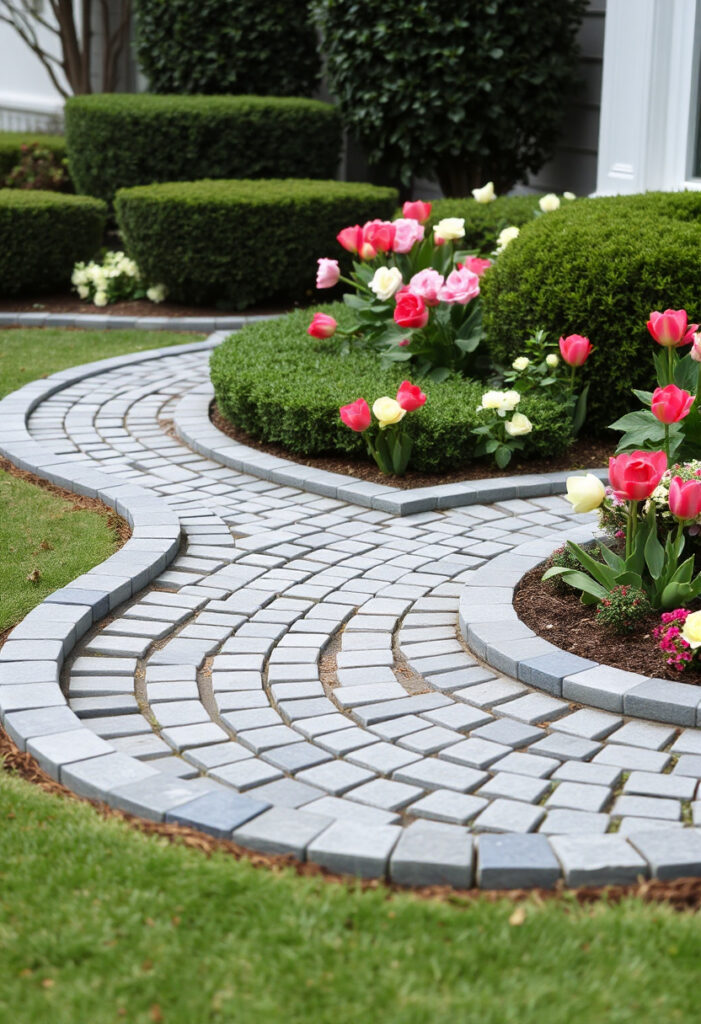
Cobblestones arranged in a flowing line give front beds a classic, European-influenced character. They work well with more formal plantings like boxwood, roses, and seasonal bulbs. Keep curves gradual — tight turns are harder to maintain and tend to look forced over time. Rounded granite cobblestones are durable and tend to hold color well through seasonal weathering.
6. Crushed Granite Mulch Beds
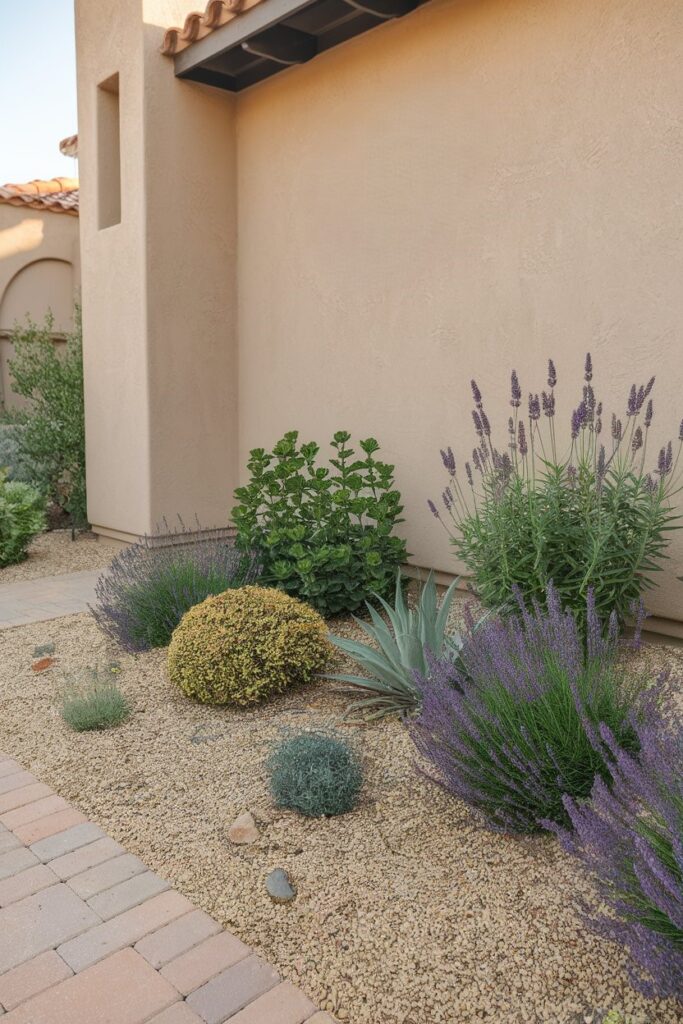
Crushed granite compacts lightly and drains well, making it a practical swap for organic mulch in beds with drought-tolerant plants. Unlike bark or shredded wood, it won’t break down or require seasonal replacement. Choose a granite color that doesn’t compete with your plantings — neutral tan and buff tones tend to recede and let flowers read clearly against the surface.
7. Stacked Stone Raised Beds
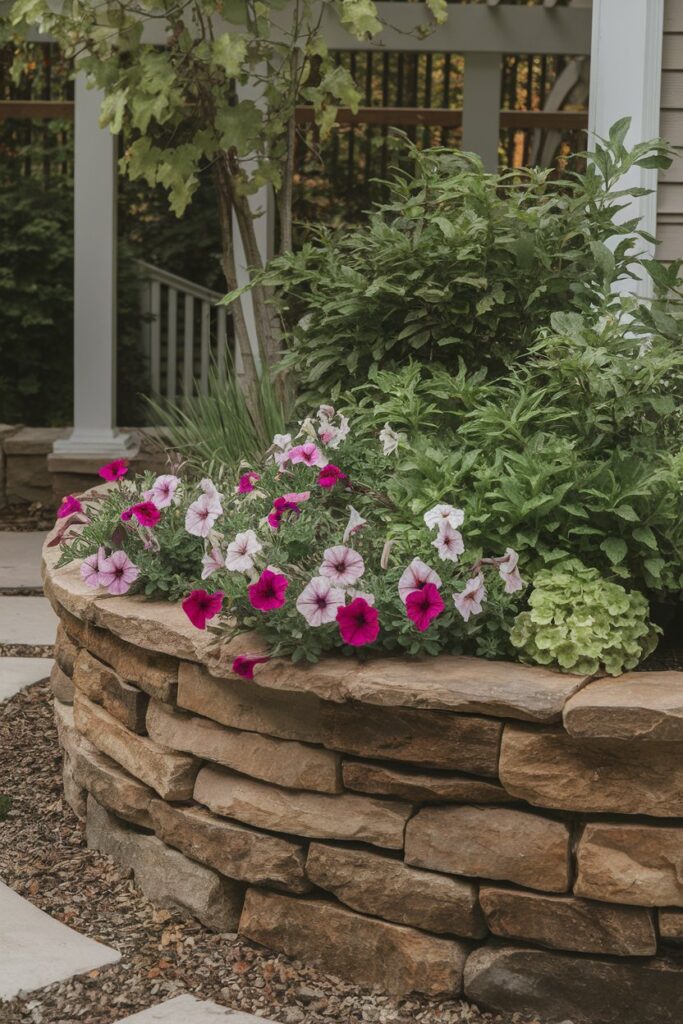
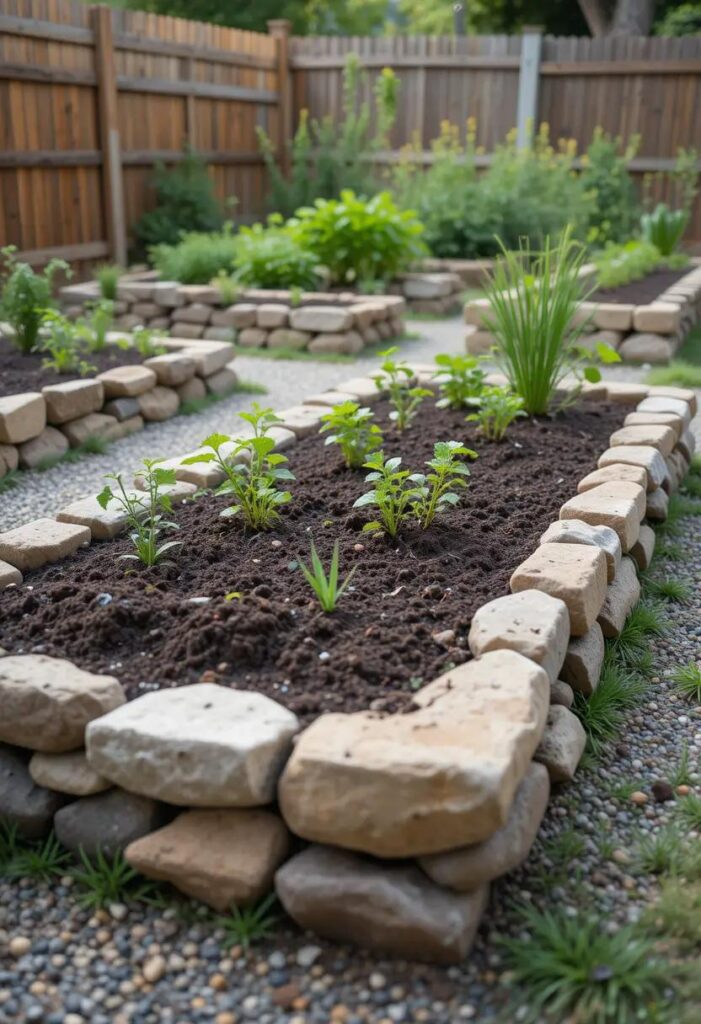
For homes with a lower entry or sunken front walk, raised beds built with stacked stone bring plantings up to eye level and improve drainage for plants that resent wet roots. Dry-stacked construction works for walls under about 2 feet. Taller structures generally benefit from mortared joints or a professional assessment before building.
8. Pea Gravel Pathways
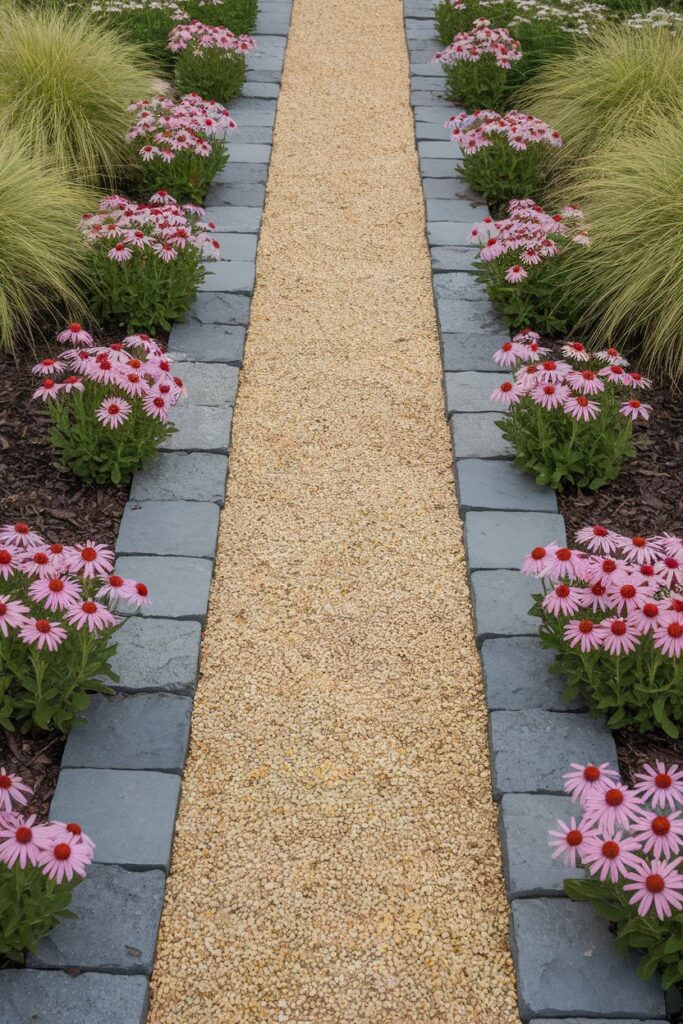
Wider flower beds benefit from a narrow internal path of pea gravel, which gives you a place to step without compacting planting soil. Border the gravel sections with a slightly larger stone to define the edge clearly and keep gravel from migrating into planted areas over time. The contrast in stone size also adds visual layering to the overall bed.
9. Mixed Stone Texture Combinations
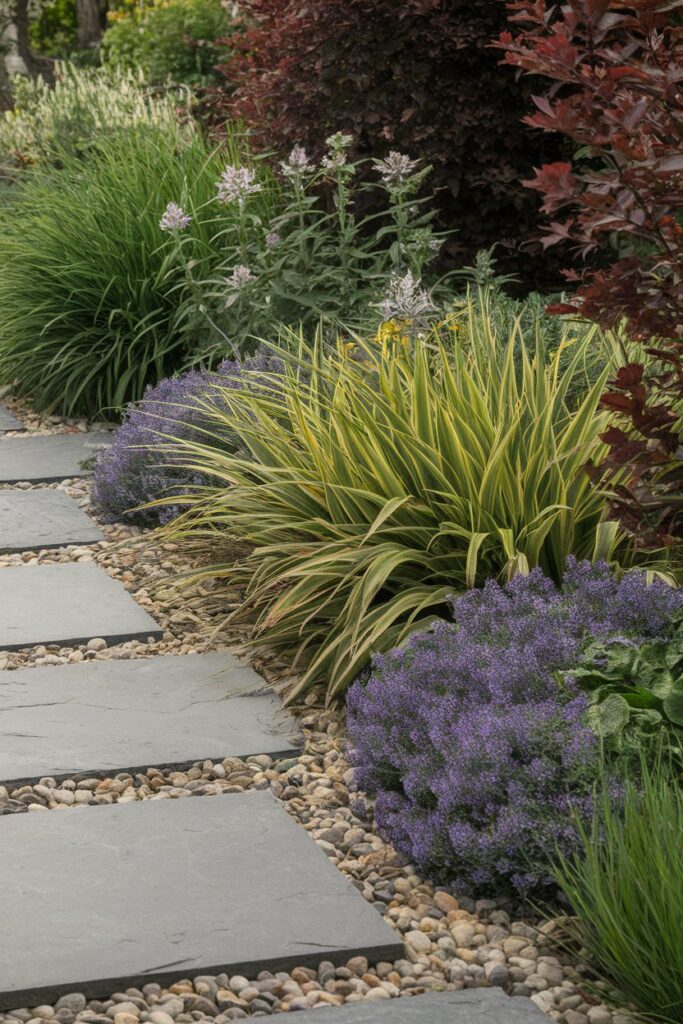
Combining different stone types within a single bed — larger fieldstones for the primary border, smaller river rocks as fill or accent — creates textural variety without visual chaos. The key is keeping the color palette consistent. Choose stones that share undertones, and the mix reads as intentional rather than collected-from-wherever.
10. Natural Stone Steps
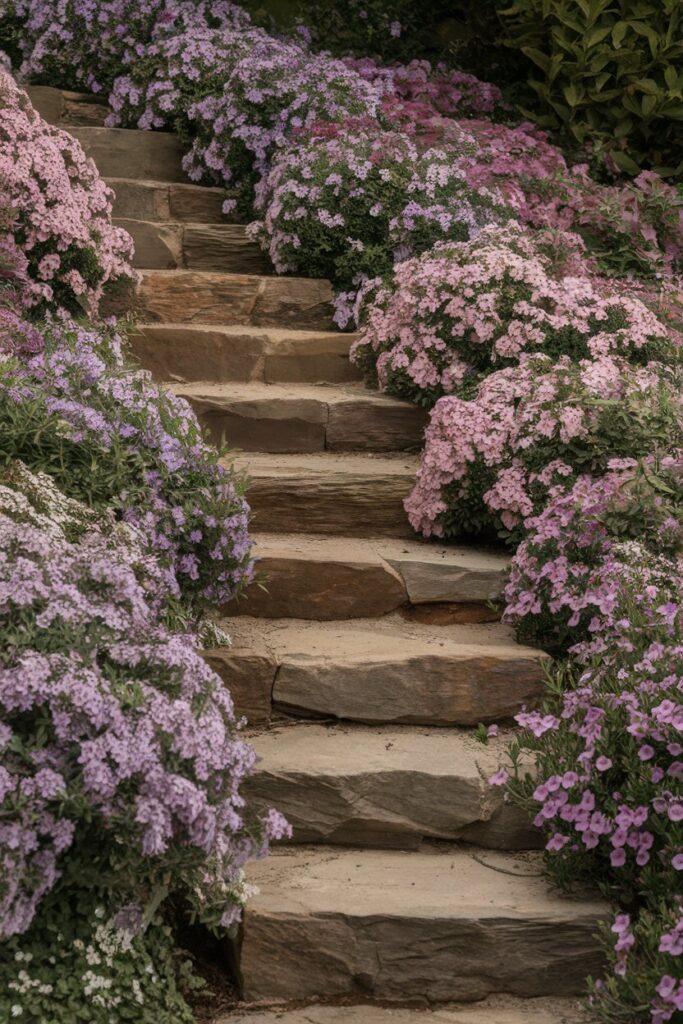
Where the front yard drops down toward the street or walk, natural stone steps flanked by planted edges tie hardscape and landscape together naturally. Cascading plants along the step edges — creeping phlox, trailing petunias, or alyssum — soften the stone without obscuring it. The combination tends to feel more integrated than steps installed in isolation.
11. Dry Creek Bed Integration
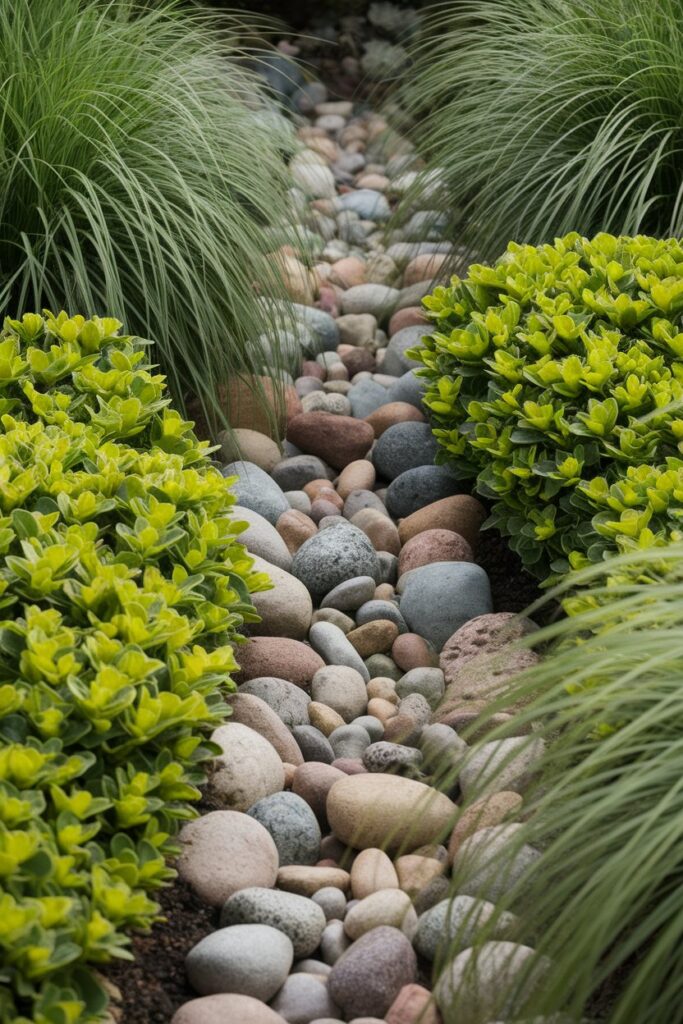
A simulated dry creek bed running through or alongside a flower bed handles drainage and adds visual movement at the same time. Use a mix of stone sizes — larger rocks at the edges, smaller river rock in the center channel — to suggest the natural look of a real stream bed. This approach works particularly well in yards that collect runoff after rain.
12. Mortared Stone Borders

For a permanent, precise edge, mortared stone construction holds its position through frost heave and seasonal soil movement better than dry-laid options. The installation requires more effort upfront, but the result needs essentially no repositioning year to year. This technique suits formal front yard designs where clean geometry is part of the overall look.
13. Slate Chip Mulch Areas
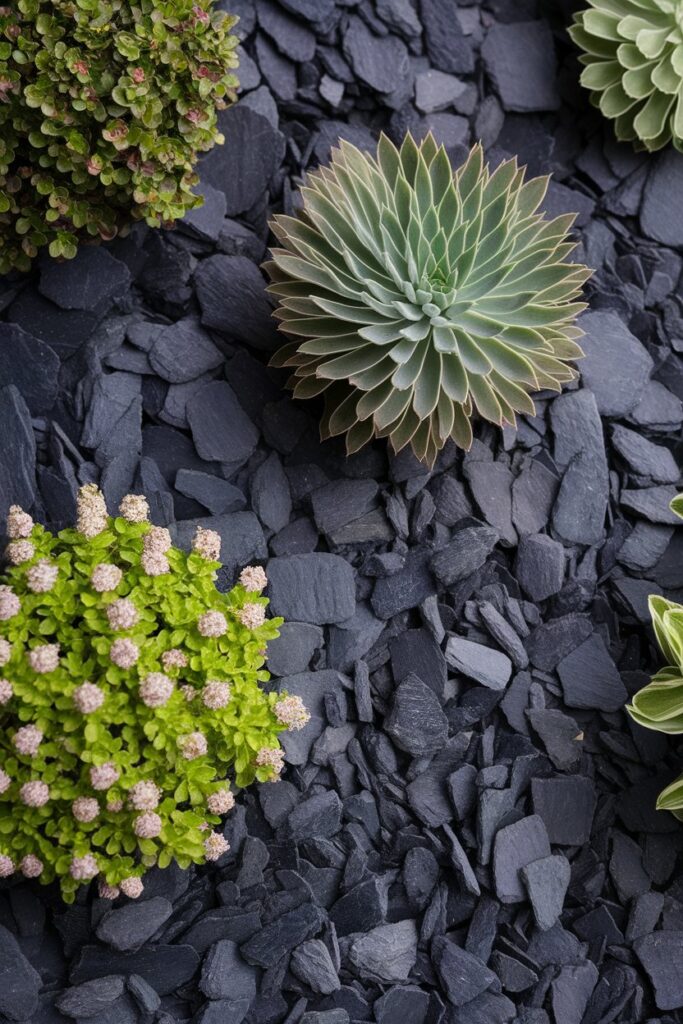
Slate chips come in purple, green, and blue-gray tones that can complement specific flower colors in a way standard mulch rarely does. They also retain moisture well while resisting the decomposition that eventually changes the texture of organic mulches. Use them selectively — as accents within a larger bed rather than wall-to-wall coverage — to avoid an overly busy surface.
14. Gabion Wall Planters

Gabion walls — wire mesh cages filled with local stone — offer a contemporary alternative to traditional stacked borders. They’re durable, drain freely, and have a textural quality that suits modern or industrial-influenced architecture. Filled with regionally sourced stone, they tend to feel grounded in the landscape rather than imported into it.
15. Fieldstone Circle Gardens
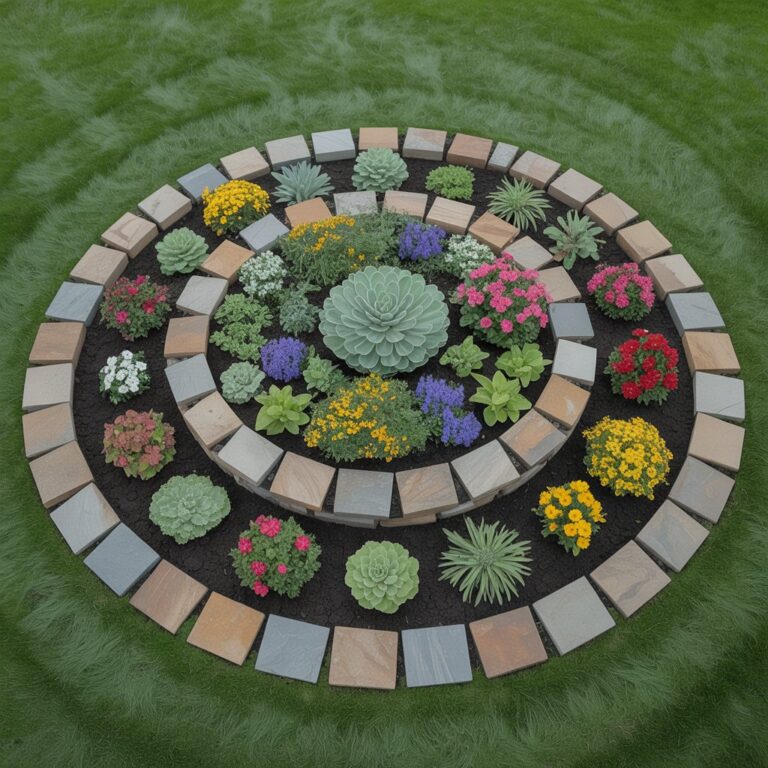
A circular bed outlined in fieldstone works well as a focal point in an open front yard. Plant the center with a taller specimen — a small ornamental tree, a tall grass, or a standard rose — and work outward with lower-growing perennials for layered depth. The irregular character of fieldstone softens the circle just enough to keep it from feeling rigid.
16. Sandstone Slab Edging

Flat sandstone slabs set vertically into the soil create clean, linear bed edges with a slightly more refined look than loose stone placement. This technique works well along walkways and foundation plantings where a straight, consistent edge reads better than a casual border. Sandstone cuts reasonably cleanly and is manageable for a DIY installation.
17. Decomposed Granite Surfaces
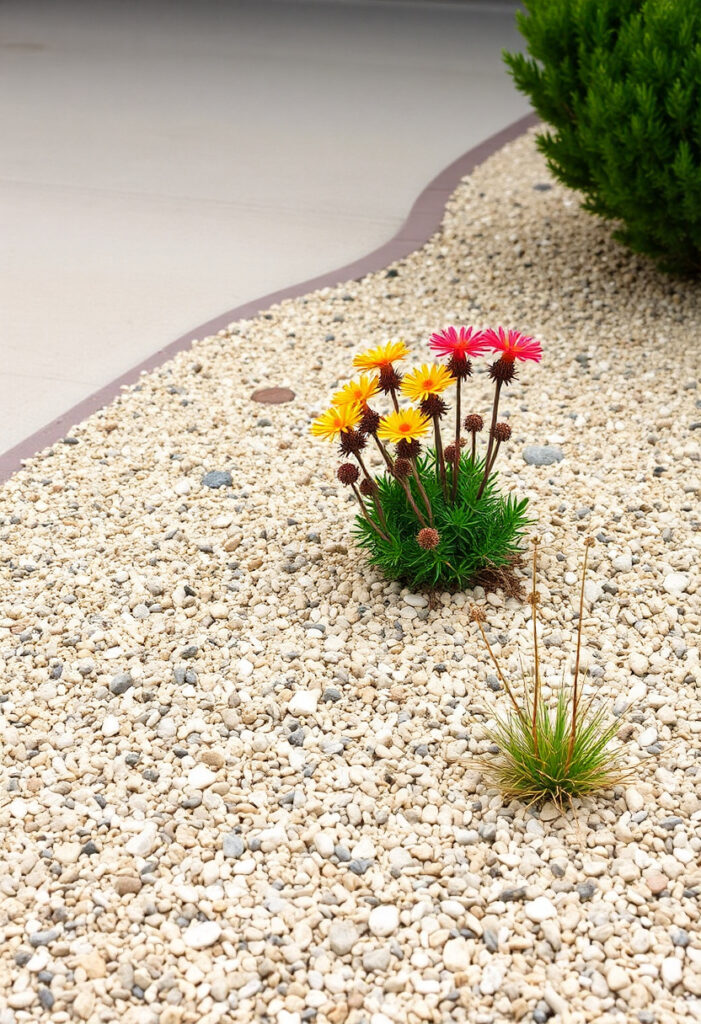
Decomposed granite sits between gravel and compacted soil in texture — it packs down enough to walk on while still allowing water to move through. It works well as a base material in dry-climate beds or around drought-adapted perennials where you want a tidy, low-maintenance surface that doesn’t shift underfoot the way loose gravel can.
Plant Selection for Stone-Bordered Flower Beds
Stone borders and rock mulch tend to warm the soil quickly in spring and drain freely — conditions that suit drought-tolerant plants well. Sedum, black-eyed Susan, and ornamental grasses are reliable performers across a range of climates and hold their own visually against the texture of stone.
In partially shaded spots, hostas, astilbe, and coral bells handle the moisture variations that come with stone mulch more gracefully than plants that need consistent irrigation. For seasonal color, marigolds, zinnias, and impatiens fill gaps between perennials without demanding much from the soil.
Installation Tips for Rock and Stone Borders
Clear existing grass and weeds thoroughly before placing any stone. Excavate 2–3 inches in areas where border stones will sit so they have something to rest against and resist lateral movement. Landscape fabric under decorative stone helps suppress weeds while still allowing water through — worth the extra step in beds that are prone to weed pressure.
For permanent borders, a shallow concrete footing beneath the first course of stone adds stability that holds through repeated freeze-thaw cycles.
Maintenance Considerations
Stone-bordered beds are relatively low maintenance compared to wood edging or metal borders. In spring, check for frost heave and reset any border stones that have shifted. Clear debris that collects between rocks, particularly in fall after leaf drop. The stone elements hold up through seasons in a way organic materials simply don’t — which is most of the reason people reach for them in the first place.
Cost Considerations and Budget Planning
Stone border projects vary considerably in cost depending on material and installation complexity. River rock and fieldstone are typically among the more affordable options; cut limestone and flagstone tend to run higher. Factor in delivery charges for bulk stone orders and any excavation the project requires.
DIY installation can bring costs down substantially for straightforward borders. More complex work — terraced walls, mortared construction, steps — may be worth getting a professional assessment before you start.
Seasonal Interest and Year-Round Appeal
One practical advantage of stone-bordered beds is that they maintain their structure and appearance through winter, when most plant material goes dormant. That year-round presence keeps the front yard looking considered rather than abandoned during the off-season.
To extend seasonal interest further, choose plants with staggered bloom times and include at least a few evergreen elements for winter structure. Ornamental grasses are particularly useful here — they add movement and texture from fall through early spring, long after flowering plants have finished.