13 Rose-Covered Trellis Ideas to Transform Your Garden Space
A rose-covered trellis does two jobs at once — it gives climbing roses somewhere to go, and it gives your garden a focal point worth looking at. The tricky part is matching the structure to your space, your rose variety, and how much maintenance you’re realistically willing to do.
Most climbing roses reach mature weights of 20–30 pounds per plant, which rules out anything flimsy or temporary. You also need adequate spacing between slats or wires — around 4–6 inches — to let air move through the foliage. Poor air circulation is one of the more reliable ways to invite fungal disease into an otherwise healthy rose.
Material choice matters more than most people realize. Cedar and redwood resist rot and insects naturally, which makes them worth the upfront cost for permanent installations. Galvanized steel and powder-coated aluminum hold up well too, though in humid climates they’ll need occasional attention to stay ahead of rust.
Key Takeaways
- Match trellis material to your climate — wood in dry regions, metal in wet ones.
- Install structures before planting to avoid disturbing roots later.
- Most trellises over 6 feet tall need concrete footings, especially in high-wind areas.
13 Rose Trellis Ideas, by Style and Structure
These options range from classic to contemporary, freestanding to wall-mounted. A few work for nearly any garden; others are better suited to specific conditions or aesthetics.
1. Classic Wooden Lattice
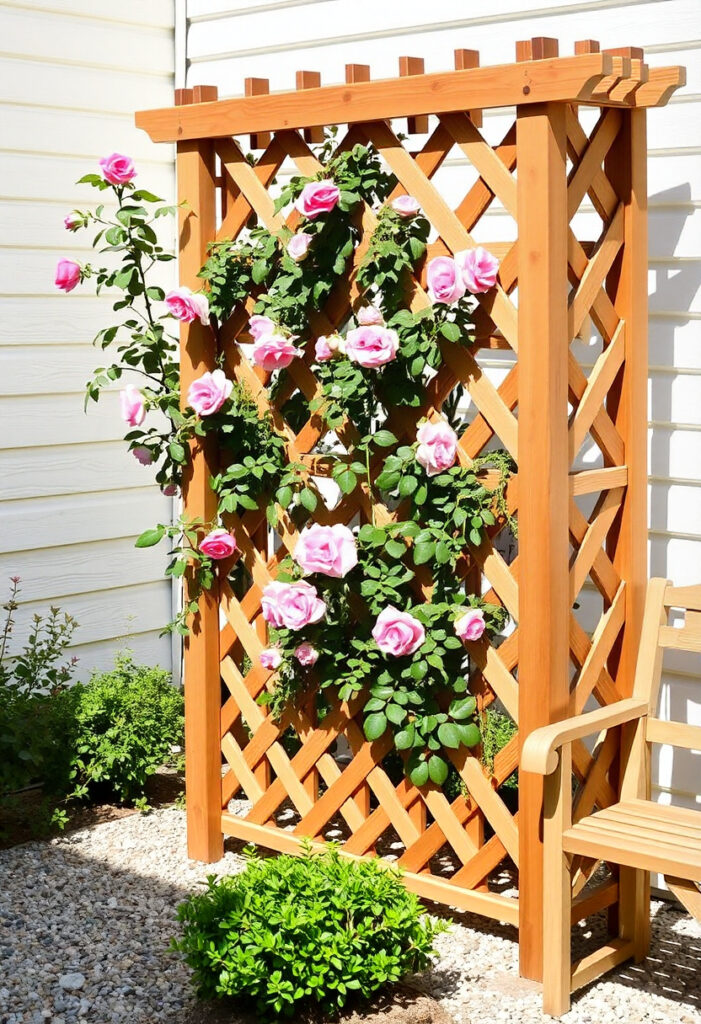
Intersecting wooden slats in diamond or square patterns give roses plenty of attachment points and look good doing it. Lattice suits traditional garden styles well and is widely available in pre-made panels if you’d rather not build from scratch.
Use pressure-treated lumber for any section making ground contact, and apply wood preservative annually. Mount the trellis at least 6 inches from walls or fences — roses plastered flat against a surface don’t get the airflow they need.
2. Wrought Iron Decorative Panels

Wrought iron holds up to weather better than most materials and looks good even before the roses fill in — the scrollwork and curves carry the garden through the early seasons. The downside is weight: these panels aren’t easy to reposition once they’re in.
Apply rust-resistant primer and repaint every 3–4 years. Where metal contacts stems, a rubber or plastic guard prevents damage when the wind moves things around.
3. Wire Grid Systems
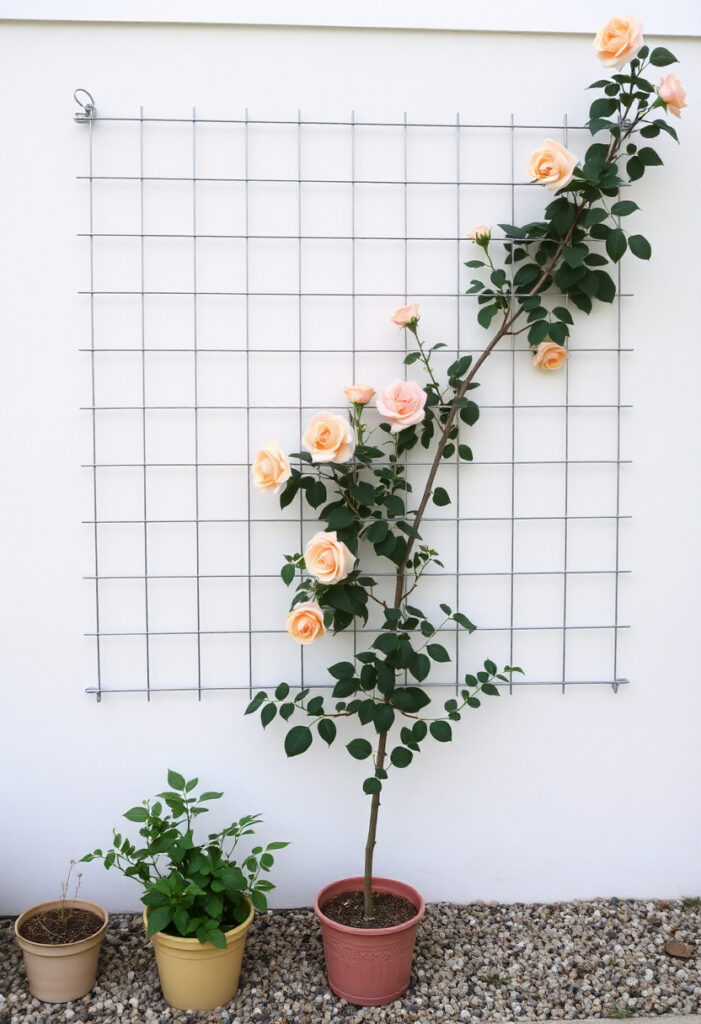
Wire grids are the low-profile option — inexpensive, clean-lined, and nearly invisible once roses mature. They suit modern garden designs well, and the lack of ornamentation means the roses do all the visual work.
Stretch horizontal galvanized wire every 12–18 inches between sturdy posts, add vertical wires at similar intervals, and use turnbuckles to maintain tension over time. Straightforward to install, and easy to replace sections if something fails.
4. Bamboo Panel Trellises
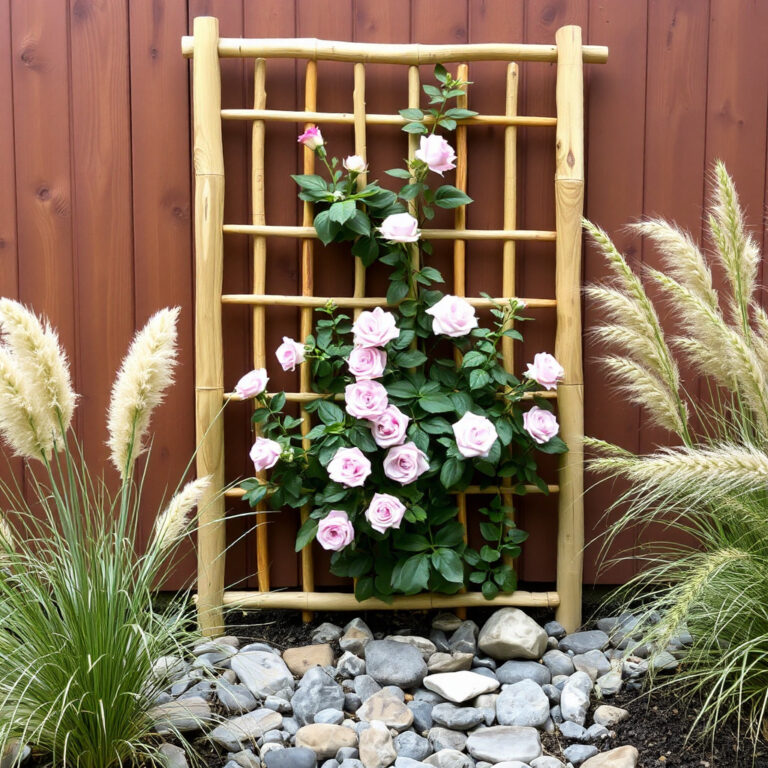
Bamboo blends into garden settings naturally and works particularly well in Asian-inspired designs or eco-conscious landscapes. It’s not a permanent solution — expect to replace panels every 5–7 years depending on your climate — but treated bamboo holds up better than people expect.
Apply bamboo sealant regularly and choose panels rated for outdoor use. The sustainability angle is genuine, which isn’t always the case with materials marketed that way.
5. Obelisk Tower Designs
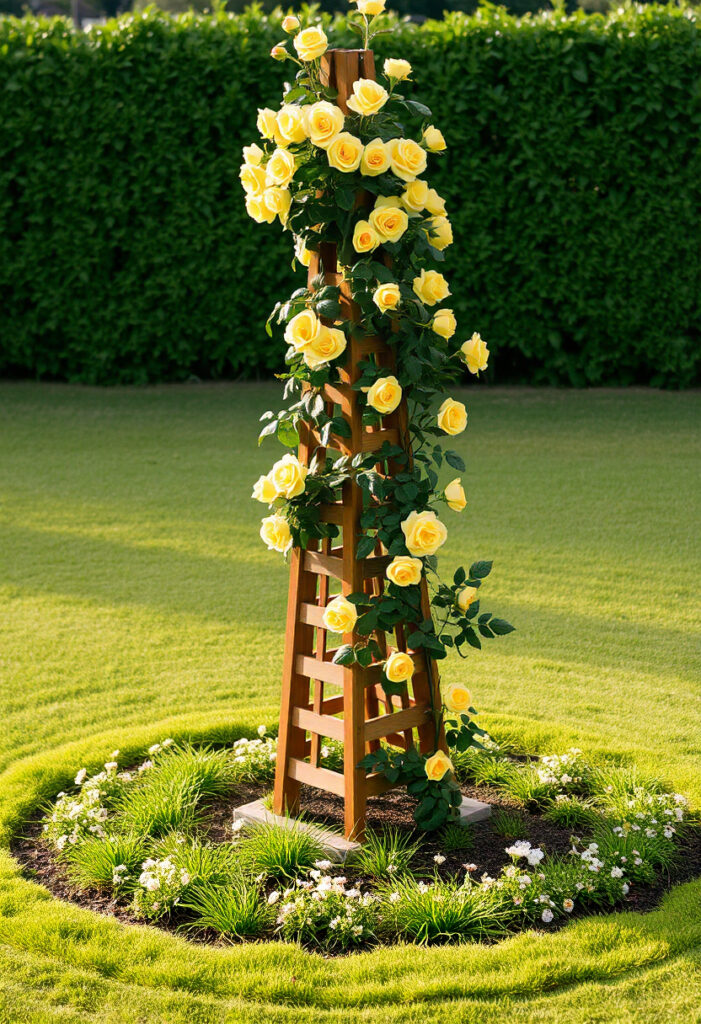
Obelisks earn their place as standalone garden features. At 6–8 feet tall, they give vigorous climbing varieties room to perform, and a pair flanking a path or entry does something a flat trellis can’t. Build with a base of 18–24 inches tapering to 6–8 inches at the top, and add diagonal bracing between vertical supports — it’s the difference between a structure that sways and one that doesn’t.
6. Arched Walkway Trellises
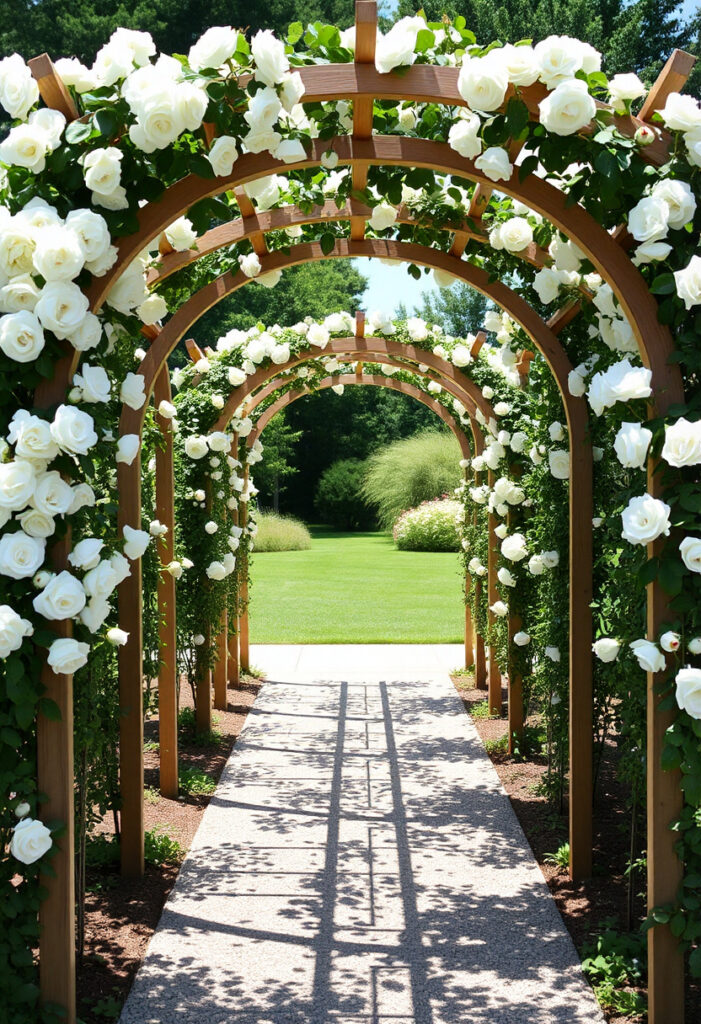
An arched trellis is one of those projects that looks ambitious but pays off in a way that’s hard to match. Connected arches forming a walkway covered in climbing roses is genuinely one of the better things a garden can offer.
Keep minimum headroom at 7 feet and anchor footings below the frost line in cold climates — heaving from freeze-thaw cycles will pull a shallow footing right out of the ground.
7. Fan-Shaped Wall Mounts
Fan trellises spread outward from a central mounting point, which makes them well-suited to compact spaces and espaliered roses. They’re efficient — you get good coverage without building out into the garden.
Mount with a gap from the wall surface to prevent moisture buildup, use galvanized hardware throughout, and check the mounting annually. A fan trellis that pulls free of the wall mid-summer takes the rose with it.
8. Modular Panel Systems
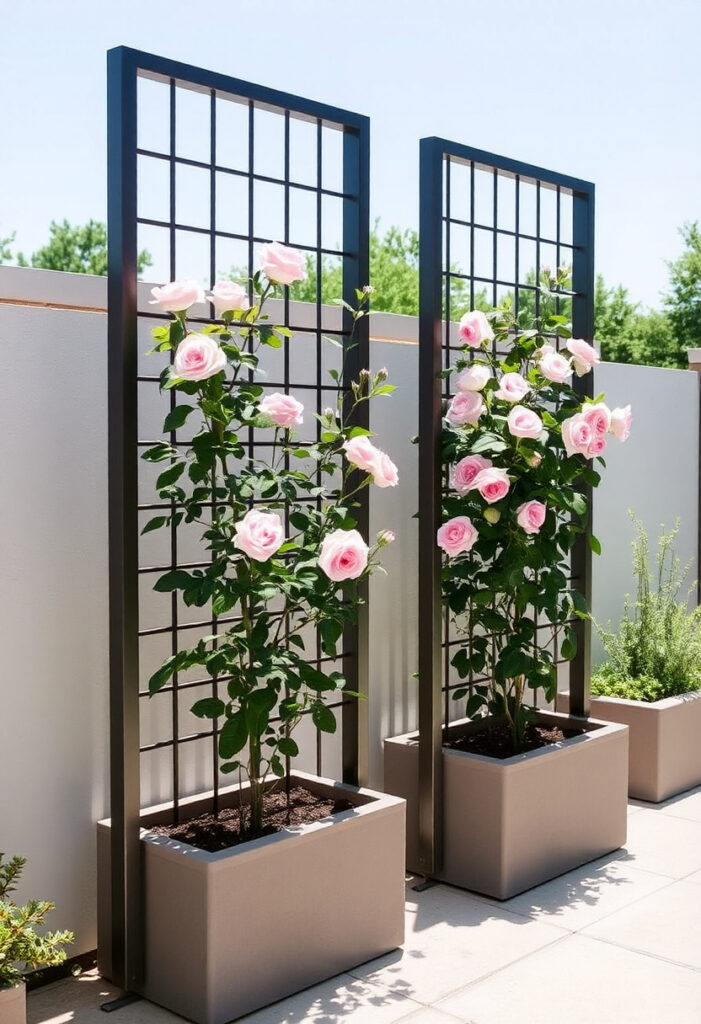
Modular systems use standardized panels — typically 2×6 or 3×6 feet — that connect and reconfigure as your garden evolves. They’re a practical choice for renters or anyone who redesigns their outdoor space every few years. The flexibility is real, not just a marketing claim.
Pro Tip: Use heavy-duty hinges or brackets at connection points. Standard panel connectors can loosen under sustained wind loads, especially once the panels carry the weight of a mature rose.
9. Copper Pipe Frameworks

Copper develops a natural patina over time, which is either the appeal or the concern depending on your aesthetic. Structurally, it offers excellent corrosion resistance and works with standard plumbing fittings, so the configurations are nearly limitless.
Use lead-free solder for all joints. If you want the weathered green look immediately, patina solutions are available — though letting it develop naturally tends to look less forced.
10. Tensioned Cable Systems
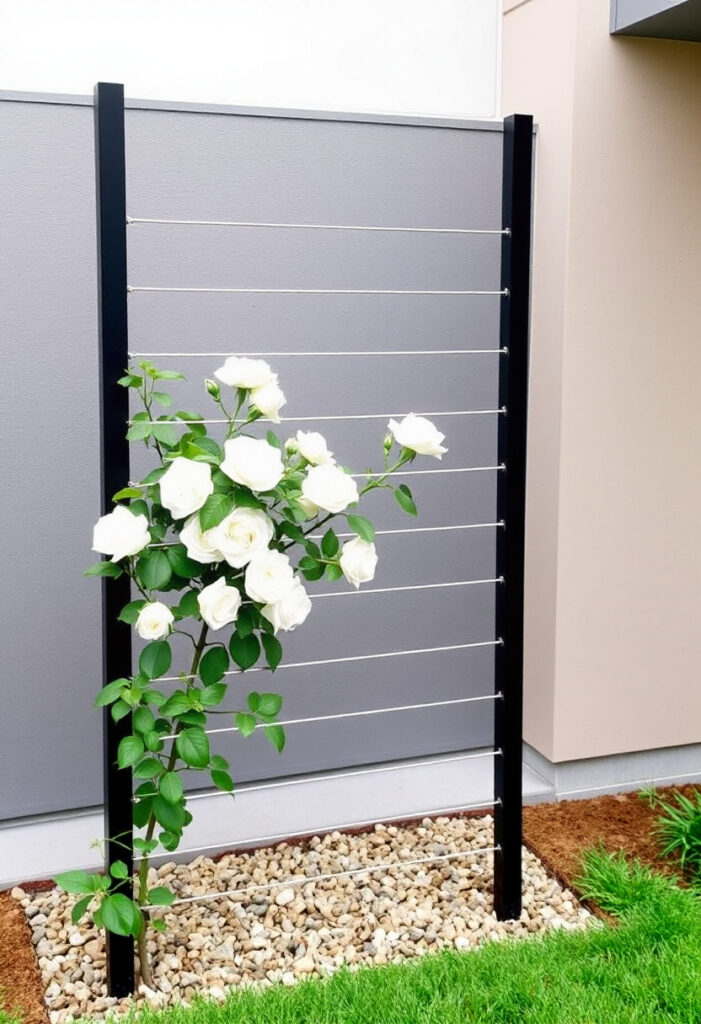
Stainless steel cables stretched between posts essentially disappear once roses fill in. That’s the point. These systems suit contemporary gardens where the plant is the feature, not the support structure.
Use 1/8 to 3/16-inch cable with appropriate tensioning hardware, space cables at 12–18 inch intervals, and re-tension annually. It’s a bit more technical to install than panel or lattice systems, but the result is cleaner than anything else on this list.
11. Pergola-Integrated Designs

A rose-covered pergola over a seating area is the kind of project that changes how you use the garden. Roses overhead provide seasonal shade and fragrance in a way that a flat trellis on a distant fence doesn’t.
Size your posts for the combined load of the structure, the roses, and wind — it’s more than most people calculate for. Check local building codes before breaking ground; pergolas over a certain size require permits in many areas.
12. Vertical Garden Walls
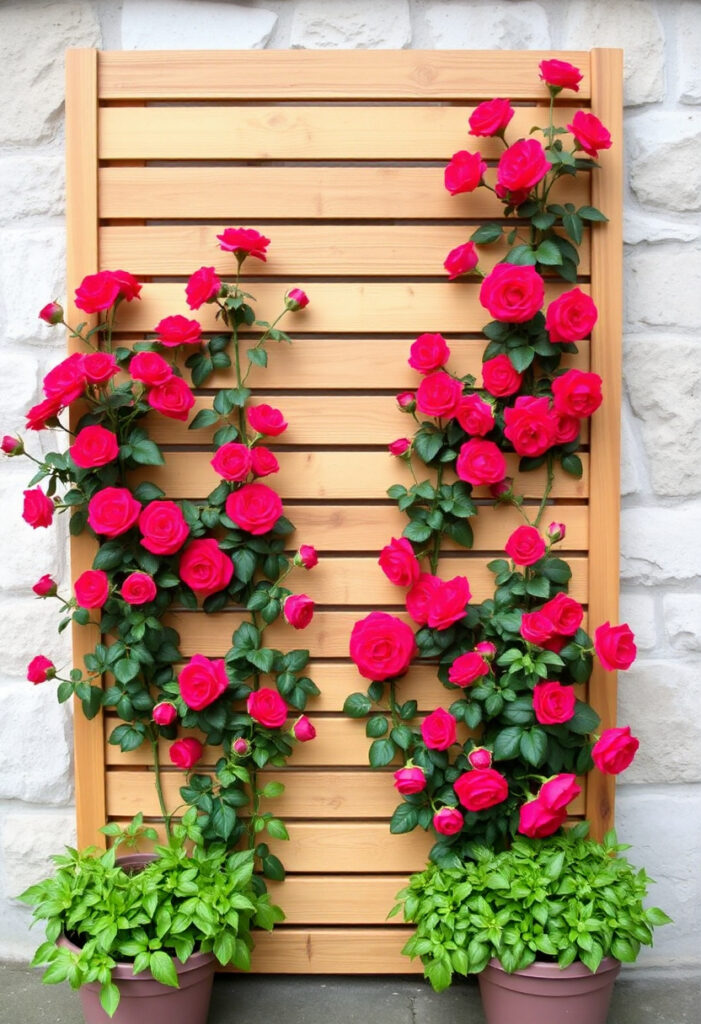
Closely spaced horizontal supports let roses build into dense, wall-like plantings — useful for privacy screening or covering a boundary you’d rather not look at. Install horizontals every 8–12 inches and run irrigation at multiple heights, because plants at the top and bottom of a vertical wall dry out at very different rates.
13. Spiral Tower Configurations

Spiral frameworks are the unconventional option on this list — a three-dimensional growing surface that shows the rose from multiple angles rather than flattening it against a plane. They’re not for every garden, but in the right setting they’re genuinely worth considering.
Maintain a spiral pitch of 12–18 inches per complete rotation to match natural rose growth patterns, and make sure the foundation supports the structure under full plant weight.
Installation and Seasonal Care
Install the trellis before you plant the rose — working around established roots is the kind of thing that seems manageable until it isn’t. Prepare the planting area with well-draining soil and compost, and use concrete footings for any structure over 6 feet or in exposed positions.
Spring is for pruning, fertilizing, and checking connections after winter. Summer is for watering, deadheading, and keeping an eye on pests. In fall, reduce watering, secure any loose elements before storms, and apply winter protection in cold climates. A quick annual inspection — checking all hardware, connections, and protective finishes — catches small problems before they become expensive ones.
Get the structure right from the start, and a rose-covered trellis can hold its shape and keep the plant healthy for decades.